Do I have anger issues? The honest answer usually lies in a pattern rather than a single bad day: anger that arrives often, feels out of proportion to whatever set it off, is hard to stop once it starts, and leaves damage behind in strained relationships, trouble at work, or regret the next morning. One rough argument does not make a pattern. A repeating cycle does. If you are here because a court, a probation officer, or an employer said you need a class, you are not being asked to accept a label. You are being asked to learn a skill.
In Short
- Anger issues usually show up as a pattern, not a single bad day: repeated outbursts, regret afterwards, and damage to relationships or work.
- A quick self-check is in this guide, and a scored version is covered separately in our anger issues test article.
- If a court or an employer has already required a class, the question is settled. The class teaches the same skills either way, and this guide explains what to expect.
How Do I Know If I Have Anger Issues?
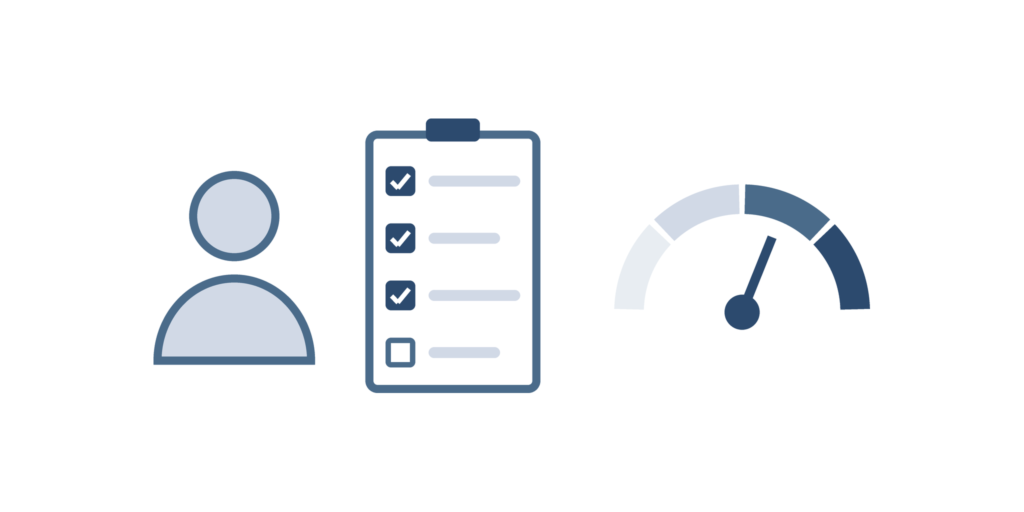
You can identify the pattern by looking at four things together: how often anger arrives, how intense it gets, how much control you have once it starts, and what it costs you afterwards. A single bad reaction tells you very little. A pattern across all four tells you a lot.
Read the statements below and answer yes or no honestly. Nobody else sees your answers.
- I get angry more often than most people around me.
- My anger goes from 0 to 10 in seconds.
- I say or do things during an argument that I regret later.
- People tell me to calm down, or they go quiet when I walk in.
- I have lost a job, a friendship, or a relationship because of how I reacted.
- I raise my voice or yell when a conversation is not going my way.
- I have thrown, broken, or hit something in the middle of an argument.
- I stay irritated for hours or days after the moment has passed.
- I feel angry first and work out the reason afterwards.
- I use the silent treatment to make a point instead of talking.
If several of those felt familiar, the pattern is worth acting on. If you would rather have a scored version than a self-check, take this quiz in our anger issues test article.
Signs of Anger Issues: Physical, Behavioral, and Relationship
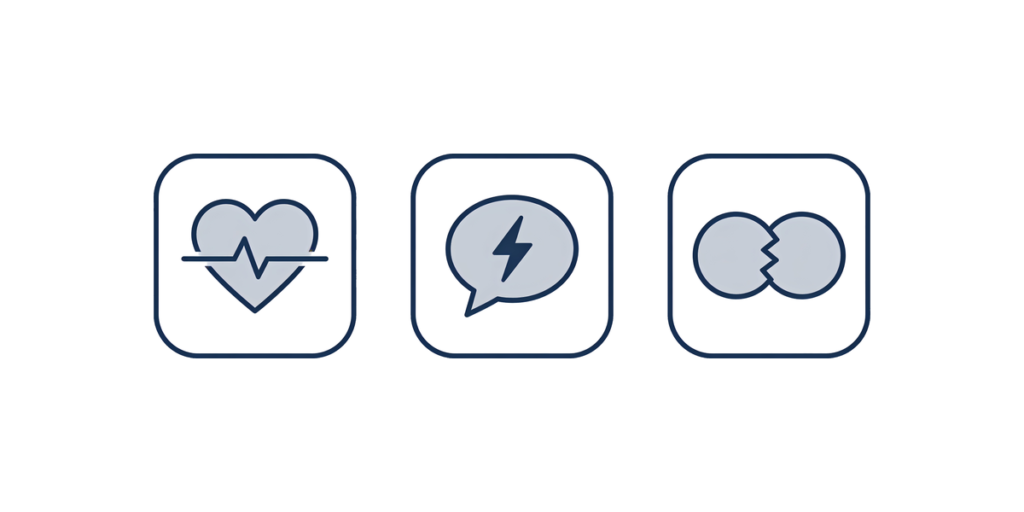
The signs fall into three groups: what your body does, what you do, and what starts happening to the people around you. NHS guidance on anger treats it as a normal emotion that becomes a problem when it starts to harm you or the people near you, and it groups the warning signs in much the same way.
Physical symptoms of anger
Anger is physical before it is verbal. Your heart rate climbs, your muscles go tense, your jaw and fists tighten, and your breathing turns shallow and quick. Some people get a headache or a hot face. Those physical symptoms are useful, because they arrive a few seconds before the words do.
Behavioral signs
Behavioral signs are the ones other people see. Yelling, swearing, and talking over someone. An outburst that feels explosive and burns out as fast as it flared. Throwing or breaking things. Driving aggressively. Passive-aggressive habits belong here too: the silent treatment, sarcasm aimed to wound, agreeing to something and then quietly not doing it. Lashing out and shutting down are both anger, just expressed differently.
Relationship and daily-life signs
The clearest sign is often in how other people behave around you. A partner, a child, or a coworker picks their words carefully and waits to see what mood you are in. The same argument runs on a loop and ends in an apology rather than a solution. You may notice relationship problems stacking up, a warning at work, or guilt that shows up once the anger drains away. When anger starts shaping your daily life and the way people approach you, it has moved past ordinary frustration.
What Causes Anger Issues?
Anger issues are usually learned reactions sitting on top of a heavy stress load, not a character flaw. If shouting was how conflict got settled in the house you grew up in, that reaction is familiar long before it is chosen.
Several things stack the odds. Ongoing stress at home or work leaves less room to absorb small setbacks. Broken sleep shortens the fuse, and so does alcohol or drug use. Anxiety and low mood often occur together with anger problems. Pain, grief, and money pressure all add to the same load.
One thing to be clear about: this article is education, not a medical diagnosis. A mental health professional diagnoses conditions. What this guide can do is help you recognize a pattern and decide how to manage it.
How Anger Affects Your Mental Health and Physical Health
Anger sets off a real physical response. The American Psychological Association describes anger as an emotion accompanied by physiological changes: heart rate and blood pressure go up, and so do the levels of the energy hormones adrenaline and noradrenaline.
That response is exactly what you want in a genuine emergency. It is expensive when it fires several times a day at things that are not emergencies, because uncontrolled anger keeps returning your body to that heightened state.
The cost is not only physical. Anger that repeats wears down the things that keep you steady: the people closest to you, your standing at work, and your own sense of being someone who behaves the way they meant to. Low mood and worry often show up alongside it, which is one more reason to take the pattern seriously rather than waiting for it to pass.
What Can You Do About Anger in the Moment?
Three tools work faster than anything else once anger is already climbing, and each one buys the few seconds it takes to control anger before it picks your words for you.
- Pause and breathe. Breathe deeply from your diaphragm, not your chest, for about a minute. The APA suggests pairing it with a calm word or phrase that you repeat to yourself as you breathe.
- Step away. Leave the room before the heat of the moment makes the decision for you. Say you need ten minutes, and then come back.
- Name the feeling. Saying “I am angry right now” to yourself sounds small, and it moves the moment from reaction to observation.
Those three buy you time. To turn them into habits that hold up under pressure, work through the full set of anger management techniques in our guide.
When Should You Seek Professional Help for Anger?
Seek professional help when anger stops being uncomfortable and starts being dangerous. That means harm to yourself or others, threats, violence, blank spots in your memory of what happened, or drinking and using to take the edge off.
You do not have to wait for a crisis. If anger is costing you relationships or work, and what you have tried on your own is not holding, that is reason enough to get help.
The options are straightforward. A therapist can work on what sits underneath the anger. Cognitive behavioral therapy, usually shortened to CBT, is a common approach and focuses on the link between how you think, how you feel, and how you act. Your doctor can point you to local services.
One distinction is worth holding on to: a class teaches skills, and a clinician treats conditions. If you need both, they work perfectly well alongside each other.
Do I Need Anger Management? What Court-Ordered Students Should Know
Two readers reach this question from opposite directions, and the answer lands in the same place.
If you are asking voluntarily, a structured class is the quickest route from suspecting you have a problem to being able to manage the moment when it arrives. You practise in a sensible order, you get feedback, and you come out with something you can use. If you would rather frame it as general self-improvement, the personal development courses cover a lot of the same ground.
If a court, a probation officer, or an employer has already required a class, the question is settled and the class is a condition of your order. That is not a diagnosis, and nobody is asking you to agree that you are an angry person. Someone decided that skills education is part of what happens next.
Here is what the class actually is. OM Worldwide’s program is CBT-based and runs 8 weeks with 16 instructional hours, with 12 and 16 week options when an order calls for a longer program. Each week is a module with a video lesson, a knowledge check, a written reflection, and scenario practice, and your progress is tracked as you go. You finish with a court-verifiable certificate. There are no same-day certificates.
See how the court-accepted online anger management class works.
Acceptance is always your court’s decision. Confirm the program length and format with your officer before you enrol, and tell them early if a deadline looks tight.
Frequently Asked Questions
Is one outburst a sign of anger issues?
Can anger issues get worse without help?
Can this guide tell me if I have a disorder?
When should I seek help for anger?
Does a court-ordered class mean I have anger issues?
Tiffany Kumar · Checked by Tiffany Kumar, founder of OM Worldwide Inc., a WOSB-certified provider that delivers behavioral education in government and rehabilitation settings nationwide.