
8-Week Program (16 Instructional Hours)
An evidence-based curriculum grounded in CBT, Executive Function Development, and Social Learning Theory, delivered over 8 structured weeks.
8 Weeks
16 instructional hours
$149
- 8 structured weekly modules
- Knowledge checks & reflections
- Weekly Life Skills tracking
- Court-verifiable certificate
- Scenario-based exercises
OM Worldwide's court-ordered life skills readiness class is 100% online, self-paced, and built for court, probation, diversion-program, attorney-referred, and personal-development requirements. Complete the 8-week program, 16 instructional hours, for $149. After full completion, OM Worldwide issues a court-ready certificate of completion that can be reviewed by the requesting court, probation officer, or agency. If the certificate page is live, link to it here. If not, link to the certificate section on this page.
What You’ll Learn Each Week
A progressive, skills-based curriculum grounded in Cognitive-Behavioral Therapy (CBT), Executive Function Development, and Social Learning Theory.
Week 1
Foundations of Self-Awareness
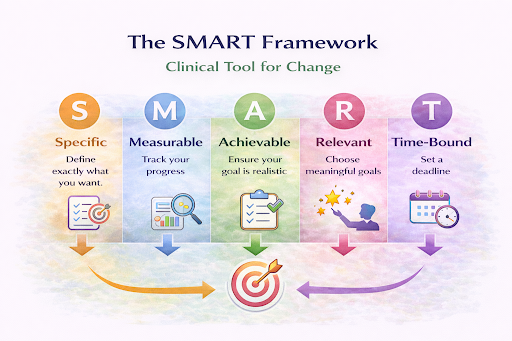
Introduction to executive functioning, personal responsibility, and the SMART goal-setting framework.
Week 2
Time Management and Decision Making
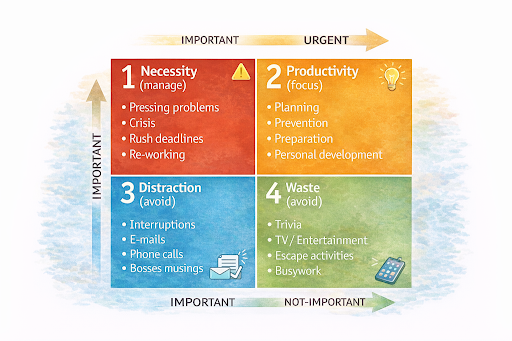
Using the Eisenhower Time Matrix and structured problem-solving for daily stability.
Week 3
Communication Skills
Active listening, assertive communication, and understanding behavioral consequences.
Week 4
Emotional Intelligence and Conflict Resolution
Emotional intensity management, body language awareness, and conflict resolution strategies.
Week 5
Financial Responsibility and Resource Management
Needs vs. wants analysis, the 50/30/20 budgeting model, credit basics, and debt management.
Week 6
Workforce Skills and Professional Responsibility
Workplace communication, accountability, reliability, and problem-solving in employment settings.
Week 7
Community Resources and Support Systems
Understanding housing, healthcare, and social service systems, and building support networks.
Week 8
Goal Setting and Long-Term Stability
Personal planning, accountability, and structured long-term goal setting.
Course Content Preview
Life Skills Preview · Week 1
Foundations of Self-Awareness
Executive Functioning · Myths vs. Facts · The Asset Audit
Unit 1 — Life Skills Preview
The Executive Functioning Model
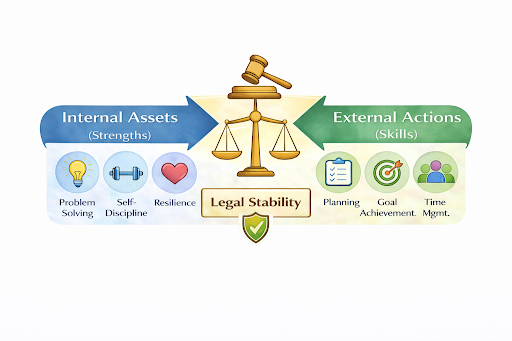
Life skills are the building blocks of Executive Functioning. Executive functioning refers to the mental processes that allow people to plan ahead, focus attention, organize responsibilities, manage time, regulate emotional responses, and evaluate consequences before acting.
These mental processes guide how individuals respond to everyday situations such as work responsibilities, financial decisions, communication, and conflict. Strong executive functioning allows a person to pause and think before reacting. Weak executive functioning can lead to impulsive decisions, missed responsibilities, and difficulty maintaining stability in important areas of life.
This course uses principles from the Psychosocial Rehabilitation Model. The model shows that personal stability depends on two key components:
Internal Assets (Strengths) + External Actions (Skills)Strengths support your decisions. Skills support your actions. When both work together, individuals are better able to avoid situations that lead to negative consequences.
Knowledge Check 1 — Life Skills Preview
1. Executive functioning refers to:
2. Which of the following is part of executive functioning?
3. Where has the system felt most difficult to manage? (Select all that apply)
- Money: Budgeting, debt, or resource planning
- Time: Punctuality, follow-through, or disorganization
- Stress: Staying calm, problem-solving, or communication
Unit 2 — Life Skills Preview
Myths vs. Facts About Change
Many people believe personal success depends on personality, luck, or circumstances. Research in psychology and behavioral science shows that consistent habits and structured planning are much stronger predictors of long-term stability. Understanding these myths helps people approach change more realistically.
Myth 1
“Success is an inherited ‘hustle’ or personality trait.”
Fact
Reliability is a practiced skill developed through habits such as planning, follow-through, and accountability.
Myth 2
“I just need a break and things will work out.”
Fact
Research shows that written action plans make people significantly more likely to follow through with goals. Planning increases consistency and reduces impulsive decision-making.
Myth 3
“My past determines my future.”
Fact
Neuroscience shows that the brain has neuroplasticity, meaning it can physically form new patterns through repeated behavior. New habits and new outcomes are possible with consistent effort.
Knowledge Check 2 — Life Skills Preview
1. Life success is determined mostly by personality traits.
✕ False2. Neuroplasticity means:
3. Which mindset has cost you the most opportunities? (Select all that apply)
- Fixed Mindset (believing change is impossible)
- Luck Myth (believing success depends on luck)
- Barrier Myth (believing circumstances make improvement impossible)
✎ Self-Reflection — Life Skills Preview
Which myth have you believed the most? How has that belief affected specific decisions in your life? What would change if you no longer held that belief?
25 words minUnit 3 — Life Skills Preview
The Asset Audit — Strengths vs. Bugs
In technology systems, professionals perform a system audit to identify strengths and weaknesses. In life skills development, a similar process is used to identify protective factors and risk factors.
Protective factors increase stability. Risk factors increase the likelihood of poor decisions or negative consequences.
Strengths (Protective Factors)
- Resilience
- Strong work ethic
- Loyalty to family or friends
- Hands-on problem-solving ability
- Persistence through challenges
Bugs (Skill Gaps)
- Impulsive decision-making
- Difficulty managing time
- Financial stress
- Emotional regulation challenges
- Difficulty organizing responsibilities
Recognizing these patterns allows individuals to focus on specific areas for improvement. The purpose of this course is not to criticize past behavior, but to identify areas where stronger systems can support better outcomes.
The Life Skills Readiness Meter helps you assess where you stand right now across key areas of executive functioning:
The goal of this program is to move you from wherever you are now toward the Stable zone — where you have consistent routines, reliable follow-through, and the executive functioning skills to manage money, time, stress, communication, and long-term goals.
Knowledge Check 3 — Life Skills Preview
1. Protective factors are patterns that:
2. The purpose of the Asset Audit is to:
3. True or False: Risk factors are permanent and cannot be reduced.
✕ False✎ Awareness Exercise — Life Skills Preview
List two of your strongest protective factors and two skill gaps (bugs) you want to work on during this program. Where would you place yourself on the Life Skills Readiness Meter right now? Crisis / Unstable / Developing / Stable?
25 words minSession 1 Attestation — Life Skills Preview
- I understand this is a structured behavioral education program.
- I understand participation and written responses are required for completion.
- I understand I am responsible for confirming this course satisfies my specific court or agency requirement.
Court-Ready Certificate of Completion
Your certificate is issued upon verifiable completion of all program requirements — not upon access alone.
- Participant name
- Program title
- Total instructional hours
- Program duration (8 weeks)
- Date range of participation
- Completion date
- Curriculum summary
- Verification statement
Certificate Disclaimer
- Verifiable and downloadable
- Includes all required documentation
- Issued only after full completion