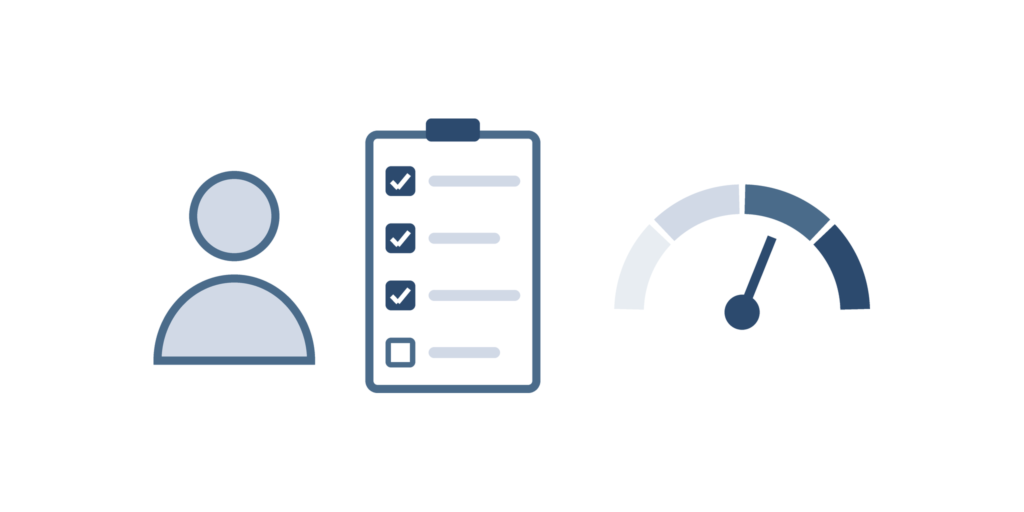
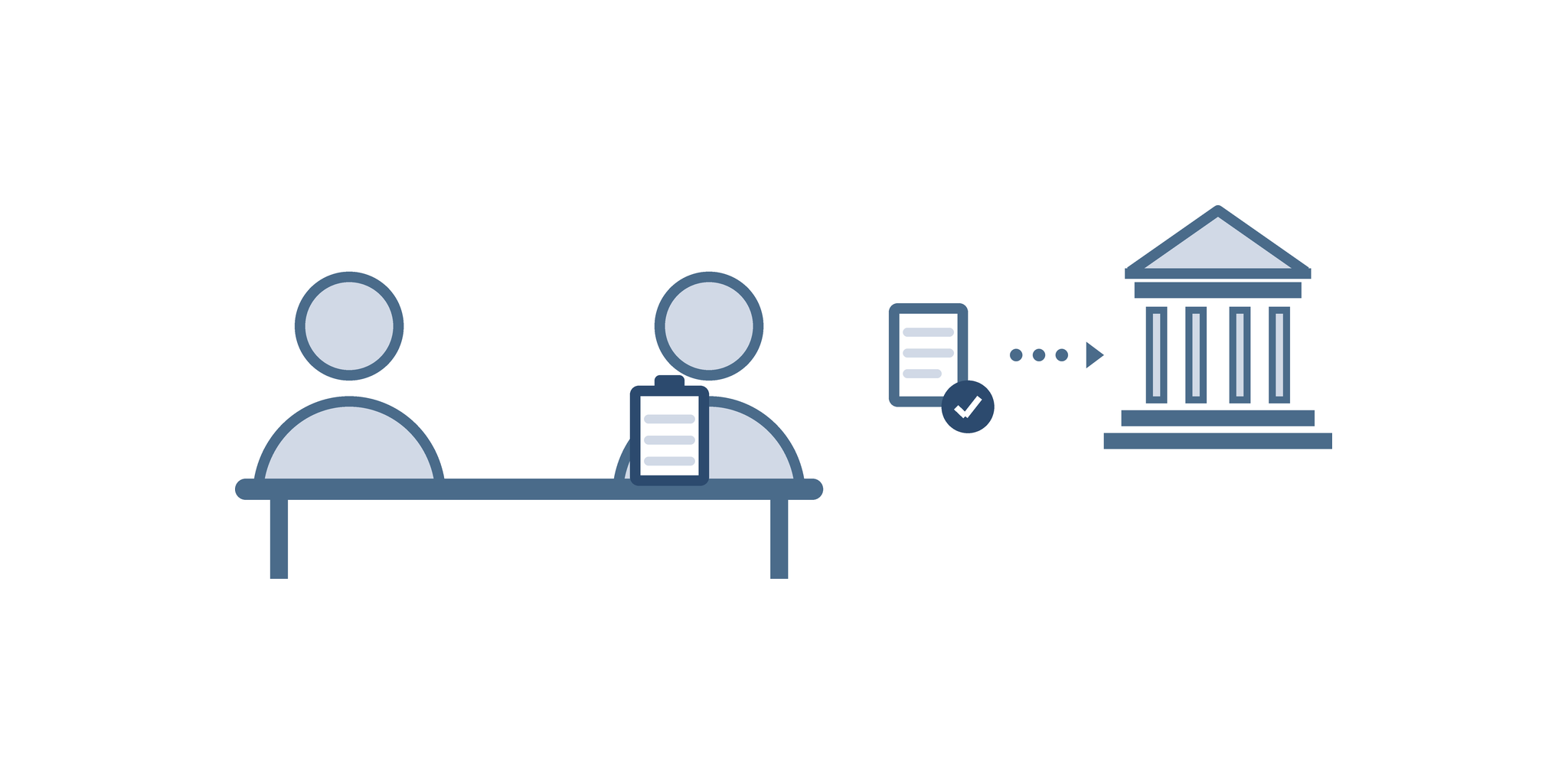
An anger management evaluation for court is a clinical assessment, not a class. A licensed mental health professional interviews you, has you complete one or more standardized anger questionnaires, reviews the paperwork from your case, and writes a report. That report tells the court whether you need anger management treatment and, if so, how much. Judges, probation officers, family courts in custody disputes and some employers order them. This guide covers who can do the evaluation, what happens in the session, what the report says, what it costs, and what comes after it, including the class an evaluator may recommend.
In Short
- A court-ordered anger management evaluation is a 45 to 90 minute assessment by a licensed mental health professional, usually a clinical interview plus one or more validated anger questionnaires, that ends in a written report to the court, probation officer or attorney named in your order.
- Published prices we checked in October 2026 run from about $150 to $350 for a standard evaluation, paid out of pocket, with rush fees on top; the report takes anywhere from the same day to two weeks.
- OM Worldwide is a class provider, not an evaluator. If your order says evaluation or assessment, complete it with a licensed clinician first; if it says class or program, the class is what you need.
What Is an Anger Management Evaluation for Court?
An anger management evaluation for court is a structured clinical assessment that gives a judge, probation officer or family court an objective opinion on whether your anger is a pattern that poses a risk, and what would reduce it.
You are not unusual for being sent to one. In a national survey of more than 34,000 US adults, 7.8% reported inappropriate, intense or poorly controlled anger, and among people who meet the criteria for intermittent explosive disorder, only 28.8% ever received treatment for their anger. Criminal courts order an anger evaluation for court after assault, battery, disorderly conduct, threats and road-rage incidents. Judges and probation officers attach them to plea deals, diversion agreements and probation conditions. Family courts order them in custody and visitation disputes, sometimes called an anger assessment for custody, and employers order them after a workplace incident.
Two orders reported in 2026 show the wording you may see on your own paperwork. In February a Colorado court put a man on 30 months of probation and required him to “complete an anger management evaluation and any recommended treatment”. In September an Illinois court sentenced a defendant in an aggravated battery case to probation and ordered him to undergo an anger management evaluation.
Neither order names a class. The evaluator recommends that part, and the court or probation officer adopts it. An evaluator can reach one of five conclusions: no treatment needed; a class of a stated length; individual counseling; a different program, such as substance use education or a domestic violence program; or a fuller psychological evaluation.
Evaluation, assessment, screening and psychological evaluation: are they the same thing?
Evaluation and assessment mean the same thing in a court order, so a court ordered anger management evaluation and an anger management assessment for court are one requirement with two names. A screening is a short questionnaire, like a free anger issues test, that only flags whether a fuller look is needed. A psychological evaluation is broader: a battery of personality and mental-health measures run by a psychologist when the concern goes beyond anger.
A domestic violence or batterer intervention assessment is a separate track under state law. Colorado requires “a treatment program and a treatment evaluation” from an approved provider for any conviction with a domestic violence finding, and Georgia’s Commission on Family Violence says “Georgia and 42 other states” keep those programs distinct from anger management. Colorado’s standards say approved providers may not recommend anger management in place of domestic violence treatment.
If your order says batterer intervention or family violence program, an anger management evaluation or class does not substitute for it. If it names domestic violence education, the domestic violence prevention program is an education class, not a certified batterer program.
Who Can Do an Anger Management Evaluation?
In practice, a court-ordered anger management evaluation is done by a licensed mental health professional: a licensed psychologist, a licensed professional counselor (LPC or LMHC), a licensed clinical social worker (LCSW), a licensed marriage and family therapist (LMFT) or a psychiatrist. The license is what courts ask about. It is what makes the report a professional opinion rather than a letter.
Certifications sit on top of that. The National Anger Management Association’s Certified Anger Management Specialist credential has levels: CAMS-I is the educational credential written for people who teach court-mandated classes, and CAMS-II, for clinical services, requires a state mental health license or a recognized substance abuse certification.
Certification courses train counselors to run court-approved anger management programs, and many published evaluators are certified anger management specialists who hold a counseling or social-work license rather than a psychology license. That is usually enough for orders that say “licensed provider”. When a court orders a full psychological evaluation it hires differently: Butte County, California’s 2025 solicitation requires a PhD, PsyD or MD with a California license.
People search for a court approved anger management evaluation, but “court-approved” is the phrase that causes the most confusion. Some courts and probation departments keep a list of accepted providers; others accept any licensed clinician who will write a report for the court.
San Diego’s Superior Court publishes provider lists but says it “does not endorse, evaluate, supervise, or monitor the programs”, and the judge alone decides whether you may pick from the list. Requirements vary by court and county, so run this checklist before you pay:
- Searching “anger management evaluation near me” returns evaluators, not your court’s list, so ask the clerk or your probation officer first whether there is a list, a required credential, and whether telehealth is allowed.
- Ask the evaluator which license they hold, in which state, and whether they have written reports for that court before.
- Ask how long the report takes, who receives it, and what the total price includes.
Can you get an anger management assessment online? Often, yes. Several licensed providers run a virtual interview by video or phone and email the report, and some say courts in all 50 states have accepted them.
Acceptance still belongs to the court, and some evaluators work in person only. The safe order is to ask your attorney or probation officer which format is allowed, then book.
What Happens During the Evaluation, Step by Step
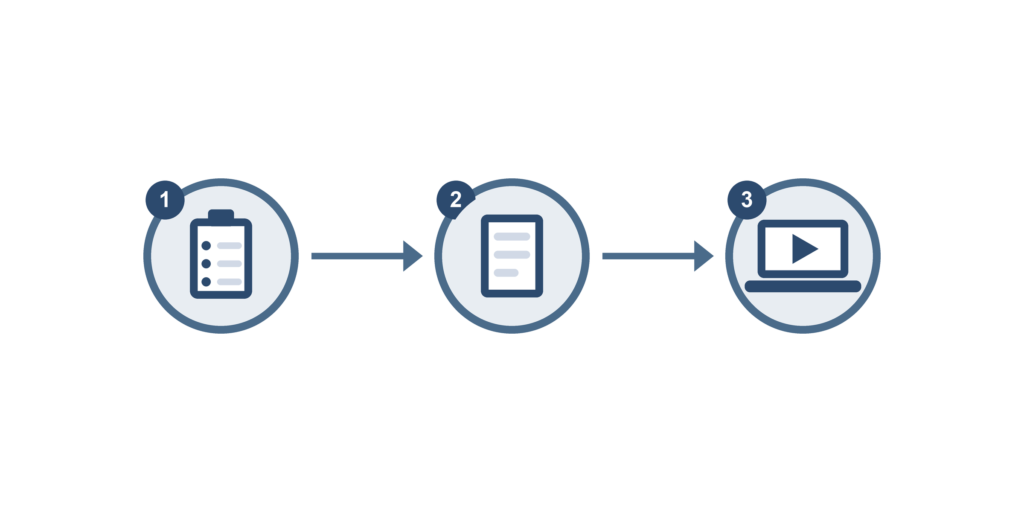
Most evaluations take one appointment of 45 to 90 minutes plus paperwork, and the written report follows within days. Here is what is included in an anger management evaluation, in the order it usually happens.
- Intake and paperwork. You send the court order or probation instructions, your case number, a photo ID and any police report. Many providers also send an online questionnaire before the session.
- The clinical interview (45 to 90 minutes). The evaluator asks about the incident in your own words. Expect questions on your history of anger and conflict, what sets you off, alcohol and drug use, mental health, and your family and work life. There are no trick questions, but the same question may come back in different forms.
- Standardized questionnaires. You complete one or more validated instruments, usually in 10 to 30 minutes. The table below describes the ones cited most often.
- Records and collateral. The evaluator reads the police report, the order and any prior treatment records. With your consent they may speak briefly to a family member, employer or previous therapist.
- The report. Written after the session and sent to whoever the order names. Standard turnaround at published providers is commonly three to five business days; some deliver in 24 to 48 hours, and busy clinics can take two weeks. From booking to a report in the court’s hands, plan on one to three weeks.
| Instrument | What it measures | Worth knowing |
|---|---|---|
| State-Trait Anger Expression Inventory-2 (STAXI-2), Spielberger | State anger, trait anger, anger turned in, anger turned out, anger control | The 57-item STAXI-2 takes 5 to 10 minutes and is one of the most cited anger instruments; validated in forensic settings, but it does not contain an inherent validity scale |
| Novaco Anger Scale and Provocation Inventory (NAS-PI), Novaco 2003 | Anger thoughts, arousal, behavior and regulation, plus provoking situations | 85 items, validated mainly with incarcerated and forensic samples |
| Aggression Questionnaire (AQ), Buss and Warren 2000; research parent Buss-Perry, 1992 | Physical aggression, verbal aggression, anger, hostility | 34 items with an inconsistent-responding index; the Buss-Perry version is the research standard |
| Anger Disorders Scale (ADS), DiGiuseppe and Tafrate | Clinically dysfunctional anger: provocations, arousal, thoughts, motives, behavior | 74 items, with an 18-item short form |
| Dimensions of Anger Reactions-5 (DAR-5), Forbes 2014 | Anger over the past four weeks | A five-item screen with a cut-off of 12; a screening tool, not an evaluation |
| Personality Assessment Inventory (PAI) | A broad personality measure with aggression and impulse-control scales | Used when the court wants a fuller picture; carries its own validity scales |
Evaluators choose the instruments; no order requires a specific one. What matters is that the questionnaire is validated and that the evaluator reads the scores alongside the interview, not instead of it.
Can you fail an anger management evaluation?
No, there is no pass mark. The report describes a pattern and recommends a level of help, so what people call failing is a report that recommends more than they hoped for. The usual causes are minimizing the incident, contradicting the police report, or hostility in the interview; answer for the whole picture, including what you would do differently, and the report will reflect it.
What the Evaluator's Report Says
The report is the product: it is what the judge or probation officer reads, and at providers that publish a length it runs two to seven pages. It usually has six parts:
- Your background and legal history
- What the evaluator observed in the interview
- Your questionnaire scores compared with the general population
- A risk statement: is anger a pattern, and is anyone at risk
- A diagnosis, or a statement that none applies
- A recommendation: none, a class of a stated length, individual counseling, or a referral to another evaluation or program
Honesty matters in two ways. The STAXI-2 has no built-in validity scale, so evaluators corroborate what you say with the police report, prior records and collateral contacts; the American Psychological Association’s forensic guidelines say practitioners “ordinarily avoid relying solely on one source of data”. Denying every frustration or contradicting the police report therefore reads as low self-awareness, and it tends to produce a longer recommendation.
The evaluation is also not confidential therapy. Under the APA’s ethics code, when services are “court ordered or otherwise mandated” the psychologist explains the purpose and the limits of confidentiality before starting. The report goes to the court, probation officer or attorney named in the order.
Colorado’s standards for domestic violence evaluations spell out two limits that reflect general forensic practice (forensic means done for a court): an evaluation “shall not be used to determine guilt or innocence”, and evaluators give no legal opinions. The anger management evaluation report speaks to risk and treatment, not to the charge.
A judge may adopt the recommendation as a condition, a probation officer tracks completion, a prosecutor may weigh it in a plea, and a family court weighs it in custody. How recent the report must be is set by the court, not the evaluator. If your case has been open a long time, ask your attorney or probation officer before you book.
How Much Does an Anger Management Evaluation for Court Cost?
Published prices we checked in October 2026 run from about $150 to $350 for a standard evaluation with a report, paid by the person ordered, with rush fees of $50 to $225 on top; family-court assessments start around $650, and psychologist-led forensic evaluations are billed by the hour. So how much does an anger management evaluation cost in your case? It depends on which of four tiers of service you are buying, and knowing the tiers is the fastest way to estimate your own anger management evaluation cost.
The first tier is the self-serve online questionnaire that issues a “letter of recommendation” or “letter of completion” after an automated quiz, sold for $30 to $40 with no clinician interview. It is not a clinical evaluation, and when an order says evaluation it is often not accepted. The second is the online questionnaire-led evaluation, $99 to $170: a counselor reviews your questionnaires, holds a video or phone interview that can run from 30 minutes to two hours, and writes a letter or report.
The third, the tier most court orders mean, is a licensed clinical evaluation by a counselor, social worker or therapist, in person or by telehealth, usually $150 to $350. The fourth is the family-court or psychologist-led forensic evaluation, from about $650 or billed by the hour, $350 an hour at one published practice.
| What you pay for | Published price | Provider and date checked |
|---|---|---|
| Licensed therapist evaluation: two-hour structured interview with instruments, diagnosis and recommendations | $300 | Grand Rapids Counseling Services, Michigan, Oct 2026 |
| Telehealth clinical evaluation: 45 to 55 minute interview, 2 to 4 page report in 5 business days; family-court assessment (telehealth questionnaire and clinical interview) priced to the case | $300, with rush delivery of $100 (3 business days), $175 (next business day) or $225 (same business day); family-court assessment from $650 | New Directions Assessments, all states, Oct 2026 |
| Evaluation by a licensed therapist | $150, or $165 with a 24 to 48 hour turnaround | Cobb Anger Management, Georgia, Oct 2026 |
| Anger management evaluation | $200 | Country Crossroads Counseling, Kansas City area, Oct 2026 |
| Anger management assessment | $350 | MPOWERme Behavioral Health Solutions, Minnesota, Oct 2026 |
| Same-day paperwork on top of a 3 to 5 business day standard | $50 rush fee | Positive Pathways, Oct 2026 |
| Forensic psychologist’s evaluation, billed hourly | $350 an hour | Psycholegal Assessments, Illinois, Georgia, Florida, Arizona and Kansas, Oct 2026 |
| What a court pays a court-appointed psychologist | $200 an hour, capped at $1,600 | Butte County Superior Court, California, Oct 2025 |
| What a court pays a court-appointed psychologist, flat rate | $650 per psychologist evaluation | San Bernardino Superior Court, California, Feb 2024 |
Published prices checked October 2026; your evaluator’s fee may differ.
Four things move the price: the evaluator’s credential (a psychologist costs more than a licensed counselor, who costs more than a certificate-holder reviewing a questionnaire), the format (telehealth providers publish the lowest clinical prices), the turnaround (same-day reports carry the largest surcharges) and the region. Ask for the total in writing, including any letter or re-issue fee.
Who pays? You do, in almost every case. Forensic psychologists state that court-ordered services “are generally not considered ‘medically necessary’ and are not covered by insurance providers or Medicaid/Medicare”, and North Carolina’s Medicaid policy excludes psychological testing “if requested by the school or legal system, unless medical necessity exists”.
The statutes that mandate these programs put the cost on the person ordered, in Arizona and Colorado among others, and Colorado requires approved providers to offer a sliding fee scale. So ask the evaluator for a sliding scale, and ask your probation officer whether county or diversion funds exist or whether an employee assistance program can pay when the order comes through work.
How to Prepare for a Court-Ordered Anger Management Evaluation
Preparation is mostly paperwork and honesty. The evaluation is not a test you pass or fail; it is a picture the court uses to decide what help fits.
- Bring the order or probation instructions, your case number, a photo ID, the police report if you have it, and your attorney’s or probation officer’s contact details.
- Book early. Deadlines in orders are firm, reports take days, and a rush fee is money you do not need to spend.
- Expect the same question in several forms. The interviewer, the records and some questionnaires all check for minimizing, so consistency matters more than polish.
- Answer for the whole picture, not the best version of yourself. Know why the incident happened and what you would do differently.
- Sleep the night before, arrive on time, and ask at booking how the report is delivered and what the fee covers.
What Happens After the Evaluation: From Report to Class
The report either closes the requirement or opens the next one. If no treatment is recommended, file the report with the court or your officer and keep a copy. If a class of a stated length is recommended, enroll promptly, finish before the deadline and submit the certificate; if counseling or another program is recommended, follow the referral.
If the evaluator recommends more than the judge wrote, the recommendation usually becomes part of what probation expects, because the order told you to follow it. Give it to your attorney, who can ask the court to confirm or adjust the requirement before the deadline.
A 2022 study of 405 people referred for anger treatment found that those who were legally mandated often showed non-clinical levels of anger, yet had 2.3 times the odds of refusing the treatment recommended. A report that finds little clinical anger is common, and following the recommendation is the part people get wrong.
The class itself works. In a meta-analysis of 14 studies of adult men convicted of an offense, those who completed anger management informed by cognitive behavioral therapy (CBT) had a 56 percent lower risk of violent reconviction and a 42 percent lower risk of general reconviction (six studies each), a practice the National Institute of Justice rates as Promising. A 2024 meta-analysis of 154 studies found that activities that lower arousal reduce anger, while venting does not.
A class that meets most evaluators’ recommendations is CBT-based and structured: weekly modules with lessons, knowledge checks, written reflections and scenario practice, progress your officer can see, and a certificate the court can verify. The standard track is 8 weeks, with 12 and 16 week options when the order or the report asks for more. See how the court-accepted online anger management class works week by week, and browse the other court-ordered programs if your report recommends a different topic.
OM Worldwide is a class provider, not an evaluator. If your order says evaluation or assessment, complete it with a licensed clinician first; if it says class or program, the class is what you need. Some courts also want a completion letter from the evaluator after the class; the class certificate and the evaluator’s letter are two different documents, so ask your attorney or probation officer which ones your court expects.
One tactic saves people the most trouble: send your probation officer the provider’s page and ask in writing, before paying, whether they will accept it. A private assessment that says you do not need a class does not cancel a class order. On deferred adjudication or diversion, the programs that dismiss a charge only if you finish every condition, a missed deadline can end in a conviction.
Our guide to probation anger management classes explains how officers verify a certificate, and parents sent by a family court can read about anger management classes for parents.
Evaluation vs. Class: Which One Does Your Order Require?
Read the verb in your order. “Complete an anger management evaluation (or assessment) and follow all recommendations” means a clinician’s evaluation first, then whatever it recommends. “Complete an anger management class”, “complete X hours of anger management” or “complete an anger management program” means the class itself; no evaluation is required unless the provider’s intake includes one.
“Enroll in anger management counseling” usually means sessions with a licensed therapist. If you are weighing an anger management evaluation vs classes, this table is the answer.
| Requirement | Who does it | What you receive | What the court gets |
|---|---|---|---|
| Evaluation or assessment | A licensed clinician | An interview, questionnaires and a written report with recommendations | The report |
| Class or program | An education provider | Weekly modules and a certificate of completion showing hours and dates | The certificate |
| Counseling or therapy | A licensed therapist | Treatment sessions | A progress or completion letter |
The hours and the format are the judge’s, and reported orders show how much they vary. In New Mexico in 2024, UFC champion Jon Jones resolved an assault charge with four hours of anger management classes, while a Florida judge the same month held state Rep. Randy Fine in contempt and ordered an eight-hour, in-person course from a named provider with proof due in 45 days. A Montana city court in 2025 ordered 40 hours of anger management classes for a first partner or family member assault.
No statute we could verify ties a class length to an evaluation result; the 8, 12 and 16 week tracks are common practice, not law. The order, not a website, decides.
Two mistakes keep coming up in court forums. The first is taking a class when the order said evaluation; the certificate does not replace the report. The second is paying for an evaluation when the order only said class. Ask your attorney or probation officer before you pay for either.
To see where you stand before the appointment, start with the signs of anger issues guide, and our guide to what anger management classes teach shows the skills a recommended class covers.
Frequently Asked Questions
How long does a court-ordered anger management evaluation take?
One appointment of about 45 to 90 minutes, sometimes split over two, plus 10 to 30 minutes of questionnaires; the written report follows in a few business days at most providers, the same day for a rush fee, and up to two weeks at busy clinics.
Can a court-ordered anger management evaluation be done online?
Often, yes: several licensed providers run the interview by video or phone and email the report, and some state that courts in all 50 states have accepted them. Acceptance is the court’s decision, so confirm telehealth is allowed for your order before you book.
Does insurance cover an anger management evaluation for court?
Usually not. Insurers pay for diagnostic evaluations that lead to treatment, not for evaluations ordered by a court for legal purposes, and most evaluators list court-ordered evaluations as self-pay. Ask about sliding scales, and ask your probation officer whether county funds exist.
What if the evaluator recommends more than the judge ordered?
The recommendation usually becomes part of what probation or the court expects, because the order told you to follow it. Do not ignore it; give it to your attorney, who can ask the court to confirm or adjust the requirement before the deadline.
Does an anger management class count as an evaluation for court?
No. An evaluation is a licensed clinician’s assessment that produces a report; a class produces a certificate of completion. If your order says evaluation or assessment, complete that first; OM Worldwide provides the class an evaluator may recommend, not the evaluation.
Is a $30 online anger assessment letter the same as a court-ordered evaluation?
No. Those products score an automated questionnaire and issue a letter of recommendation without a clinician interview. A court-ordered evaluation is a licensed professional’s interview plus standardized testing and a signed report. If your order says evaluation, ask your probation officer before paying for a quiz letter.
Can you fail a court-ordered anger management evaluation?
No, there is no pass mark. The evaluator describes your anger pattern and recommends a level of help, from none to a stated program. Minimizing the incident or contradicting the police report is what produces a longer recommendation, so answer for the whole picture.
QA note (not for publication)
Tiffany Kumar · Checked by Tiffany Kumar, founder of OM Worldwide Inc., a WOSB-certified provider that delivers behavioral education in government and rehabilitation settings nationwide.