
8-Week Program (16 Instructional Hours)
An evidence-based curriculum grounded in CBT, Social Learning Theory, and restorative parenting models, delivered over 8 structured weeks.
8 Weeks
16 instructional hours
$149
- 8 structured weekly modules
- Knowledge checks & reflections
- Weekly Parenting Skills tracking
- Court-verifiable certificate
- Scenario-based exercises
Family courts, judges, and child-welfare caseworkers order a parenting class in custody, visitation, divorce, dependency, and reunification cases, and OM Worldwide's Active Parenting and Family Skills course is built to meet that order online. Complete it fully self-paced over 8 weeks, counting as 16 instructional hours, for $149, and get your court-ready certificate of completion the instant you finish. Each certificate is dated and identity-verified, with completion independently checked, so the judge, caseworker, or attorney reviewing it can confirm it is real. The curriculum moves parents from reactive to intentional, covering positive discipline, co-parenting after separation, child development, and family stability. Because some family courts and CPS agencies require a specific program, confirm your court or caseworker accepts an online parenting class, and verify any named curriculum, before you enroll.
What You’ll Learn Each Week
A progressive, skills-based curriculum grounded in Cognitive-Behavioral Therapy (CBT), Social Learning Theory, and restorative parenting models.
Week 1
Foundations of Responsible Parenting
Intentional parenting, parental responsibility, executive functioning, and understanding children’s emotional needs.
Week 2
Child Development and Age-Appropriate Expectations
Stages of development, emotional growth, behavioral expectations, and the effects of stress on children.
Week 3
Communication Skills for Parents
Active listening, respectful discipline, clear instructions, and constructive feedback.
Week 4
Emotional Regulation and Family Conflict
Managing parental stress, de-escalation techniques, and modeling emotional control for children.
Week 5
Discipline, Boundaries, and Family Structure
Positive discipline, consistent rules, routines, and building a stable home environment.
Week 6
Co-Parenting and Family Cooperation
Communication between caregivers, conflict reduction, and maintaining stability across households.
Week 7
Rebuilding Trust and Strengthening Relationships
Restorative parenting, accountability, emotional connection, and supporting children’s security.
Week 8
Long-Term Parenting Goals and Family Stability
Family planning, values, future goals, and creating a personal parenting mission statement.
Course Content Preview (Week 1 Sample)
Parenting Skills Preview · Week 1
Foundations of Responsible Parenting
Growth Mindset · Positive Recognition · Parenting Styles · The Child’s Game
✎ Opening Baseline Reflection — Parenting Skills Preview
Why are you taking this parenting course right now? What do you hope will be different in your relationship with your child 3 months from today?
25 words minUnit 1 — Parenting Skills Preview
The Power of Positive Recognition
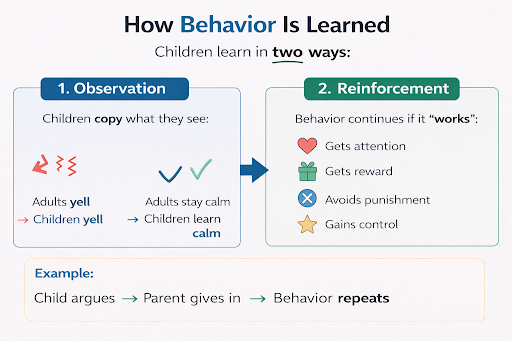
Most parents spend more time correcting than connecting. When stress is high, it becomes easy to notice only what is wrong — talking back, ignoring directions, messes, attitude.
However, behavior science shows something important:
Attention strengthens behavior.If a child receives attention primarily when doing something wrong, negative behavior increases.
Positive recognition does not mean ignoring problems. It means intentionally noticing and reinforcing behaviors you want repeated. This practice is sometimes called “Catching Them Being Good.”
When parents increase positive attention:
Defiance decreases · Cooperation increases · Emotional connection improves
Knowledge Check 1 — Parenting Skills Preview
1. Why is positive recognition powerful?
2. “Catching Them Being Good” means:
3. If a child primarily receives attention for negative behavior, what happens?
Unit 2 — Parenting Skills Preview
Common Parenting Patterns That Undermine Connection
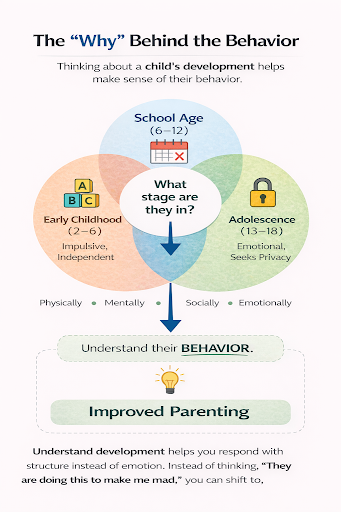
Parenting patterns are learned behaviors. Many parents repeat the patterns they experienced growing up — even when those patterns cause harm. Recognizing these patterns is the first step to replacing them with intentional, effective strategies.
Reactive Pattern
“I yell because that’s how I was raised.”
Intentional Shift
Parenting behavior is learned, not inherited. You can choose a calmer response even when your instinct says otherwise.
Reactive Pattern
“They should just know what I expect.”
Intentional Shift
Children need clear, age-appropriate communication. Unspoken expectations set them up for failure.
Reactive Pattern
“Discipline means punishment.”
Intentional Shift
Discipline means teaching. Effective discipline builds understanding, not fear.
Reactive Pattern
“I don’t have time for this.”
Intentional Shift
Small, consistent moments of connection (5–10 minutes daily) create more stability than occasional large gestures.
Knowledge Check 2 — Parenting Skills Preview
1. Parenting patterns are genetic and cannot be changed.
✕ False2. What does “discipline” actually mean?
3. Which approach creates more family stability?
✎ Self-Reflection — Parenting Skills Preview
Which reactive pattern do you identify with most? Describe one specific moment where you used it, and what you would do differently now.
25 words minUnit 3 — Parenting Skills Preview
The Parenting Response Meter — Reactive vs. Intentional
The Parenting Response Meter is a self-awareness tool that helps you recognize how you are responding to your child in the moment. It measures your parenting behavior on a scale from Reactive (emotion-driven, impulsive) to Intentional (deliberate, child-centered).
Reactive parenting happens when stress, frustration, or fatigue override your ability to respond calmly — you react before thinking. Inconsistent parenting shifts between calm and escalated responses based on mood, creating confusion for the child. Developing parenting means you are building awareness and beginning to use new tools, but still fall back on old patterns under pressure. Intentional parenting involves deliberate, child-centered responses — you pause, evaluate, and choose how to respond.
The goal of this program is to move your parenting from Reactive toward Intentional.By Week 8, you will have the tools to consistently respond with purpose, even under stress.
Knowledge Check 3 — Parenting Skills Preview
1. “Reactive parenting” is primarily driven by:
2. What effect does inconsistent parenting have on children?
3. True or False: Intentional parenting means never getting frustrated.
✕ False✎ Awareness Exercise — Parenting Skills Preview
Think of a recent interaction with your child. Where would you place your response on the Parenting Response Meter? Reactive / Inconsistent / Developing / Intentional? Explain why.
25 words minSession 1 Attestation — Parenting Skills Preview
- I understand this is a structured behavioral education program.
- I understand participation and written responses are required for completion.
- I understand I am responsible for confirming this course satisfies my specific court or agency requirement.
Court-Ready Certificate of Completion
Your certificate is issued upon verifiable completion of all program requirements — not upon access alone.
- Participant name
- Program title
- Total instructional hours
- Program duration (8 weeks)
- Date range of participation
- Completion date
- Curriculum summary
- Verification statement
Certificate Disclaimer
- Verifiable and downloadable
- Includes all required documentation
- Issued only after full completion